

In the high-stakes, high-pressure world of professional sports, physical training and tactical drills are well-known routines. What many don’t realize is that mental conditioning and maintaining emotional balance are just as crucial to victory. Competitive anxiety, emotional exhaustion, loneliness from constant travel, and the ups and downs of winning and losing—these invisible burdens challenge every athlete chasing a championship.
While coaching, physiotherapy, and recovery systems have become increasingly sophisticated, a gentle yet powerful “helper” is gaining popularity in tennis: pets. They don’t offer tactical advice or judge results—they simply provide unconditional companionship, serving as a secret weapon for athletes to stay mentally stable.
Scientific research confirms that human-animal interaction significantly boosts mental health. Stroking, playing with, or simply being near a pet triggers the release of oxytocin and dopamine, rapidly lowering cortisol levels, easing anxiety, and improving emotional stability. Even just thinking about a pet can enhance psychological resilience and stress management. This natural healing is especially valuable for athletes under constant high pressure.
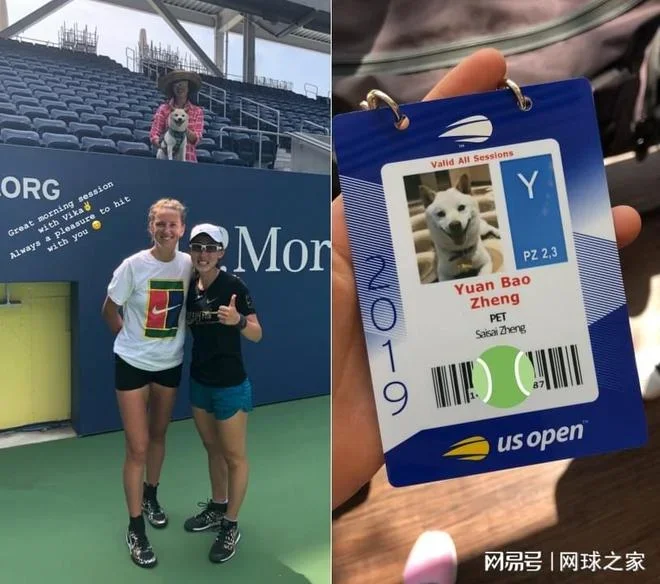
In 2019, Zheng Saisai (right) trained with Victoria Azarenka at the US Open, with Zheng’s pet dog Yuan Bao in the photo above. On the right, Yuan Bao holds an official US Open pet credential.
The most direct benefit of having a pet is mental stress relief. Pets don’t criticize mistakes, demand performance, or set expectations—they simply offer quiet companionship. This pure acceptance allows athletes to quickly let down their guard after fierce matches or grueling training sessions, facilitating psychological recovery. Compared to deliberate relaxation techniques, a pet’s company feels natural, effortless, and free of burden, especially valuable during losses, injuries, or low points.
Pets also help athletes establish a stable daily rhythm. Feeding, walking, and routine care provide fixed anchors in the chaotic, travel-heavy lives of players, creating balance between their professional and personal worlds. Moreover, low-intensity outdoor activities during pet care improve mood and serve as the healthiest break from intense training. For tennis players, who often compete alone and travel frequently, pets become the best antidote to loneliness, offering unwavering emotional support.
Today, pets are no longer just accessories to an athlete’s life—they are key members of the mental support team. In the tennis world, more and more top players are proving that their four-legged friends bring unexpected strength.
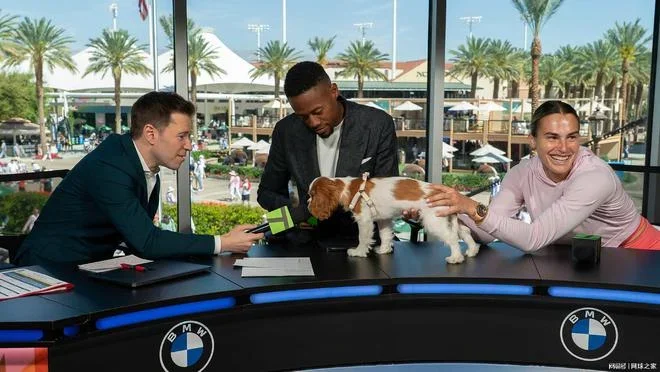
During this year’s Sunshine Double, Aryna Sabalenka (right) attended a media event with her pet dog.
World No.1 Sabalenka appeared in Indian Wells with her newly adopted puppy, Ash, calling it her “mental health pillar.” “It makes me calmer, more stable, and better able to control my emotions. Whenever I’m about to lose it, touching it helps a lot,” she said. The Cavalier King Charles Spaniel was named after tennis legend Arthur Ashe, becoming her gentlest emotional anchor off the court.
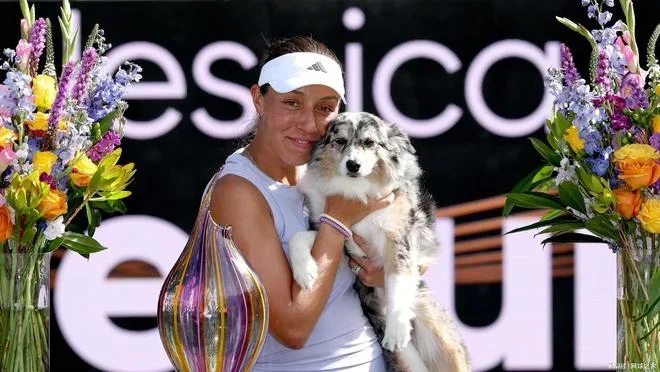
World No.5 Jessica Pegula shares an even deeper bond with her dogs. She once emotionally mourned her deceased German Shepherd after winning a title, saying, “It loved tennis most and was with me during my lowest moments.” Now, her Miniature Australian Shepherd, Maddie, has accompanied her to titles in Dubai and Charleston. “A dog’s love doesn’t judge—it just listens, hugs, and stays, helping me find gratitude in small things,” said Pegula, who also founded a charity to rescue stray dogs, spreading that healing.
American player Danielle Collins rescued a stray dog hit by a car during the Miami Open, named Crash. After arranging emergency surgery and devoted care, she formally adopted it. She said that Crash’s recovery and companionship brought her more satisfaction than any trophy. This abandoned puppy gave the tough competitor a tender emotional bond on court.
Pegula with her pet dog.
From Sabalenka and Pegula to Collins, more players realize that strength in competitive sports doesn’t come solely from muscles and willpower, but also from inner peace and being loved. Pets can’t serve or plot tactics, but they provide the most scarce emotional value: unconditional acceptance, stable companionship, and soothing relaxation.
Of course, owning a pet requires responsibility and time—not everyone can manage it. But for athletes who can, the rewards far outweigh the effort. Pets become a breath of fresh air in a pressured life, a warm haven on long journeys, and the truest comfort beyond wins and losses.
Professional tennis often emphasizes victories, records, and surpassing limits, but sometimes forgets that what truly carries a player further is love, companionship, and peace of mind. Pets won’t win matches for you, but they help steady your heart. With a pet by your side, a calm, soft, and loved heart becomes the most enduring force to reach the top. (Source: Tennis House)
